If you’ve ever stepped outside around dawn or dusk in Florida and seen a glowing, comet-like streak with a fan of light at its head — sometimes called a “space jellyfish” — you weren’t imagining it, and it wasn’t a UFO. It’s almost always a SpaceX Falcon 9 launch out of Cape Canaveral, and more often than not these days it’s carrying Starlink satellites.
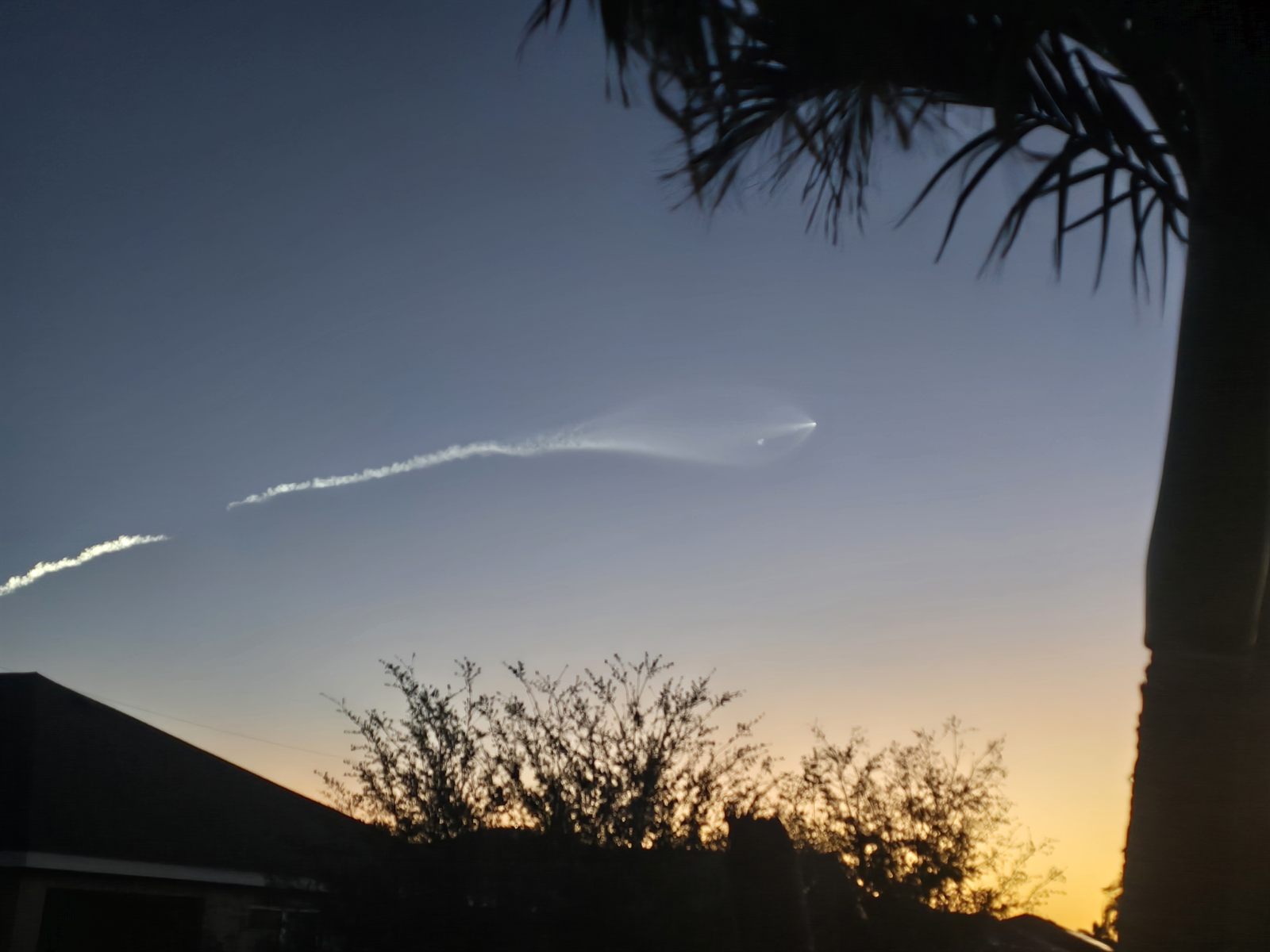
We caught this one from Cape Coral, on Florida’s Gulf coast — a few hundred miles from the launch pad, and still unmistakable:
What you’re seeing: the twilight plume
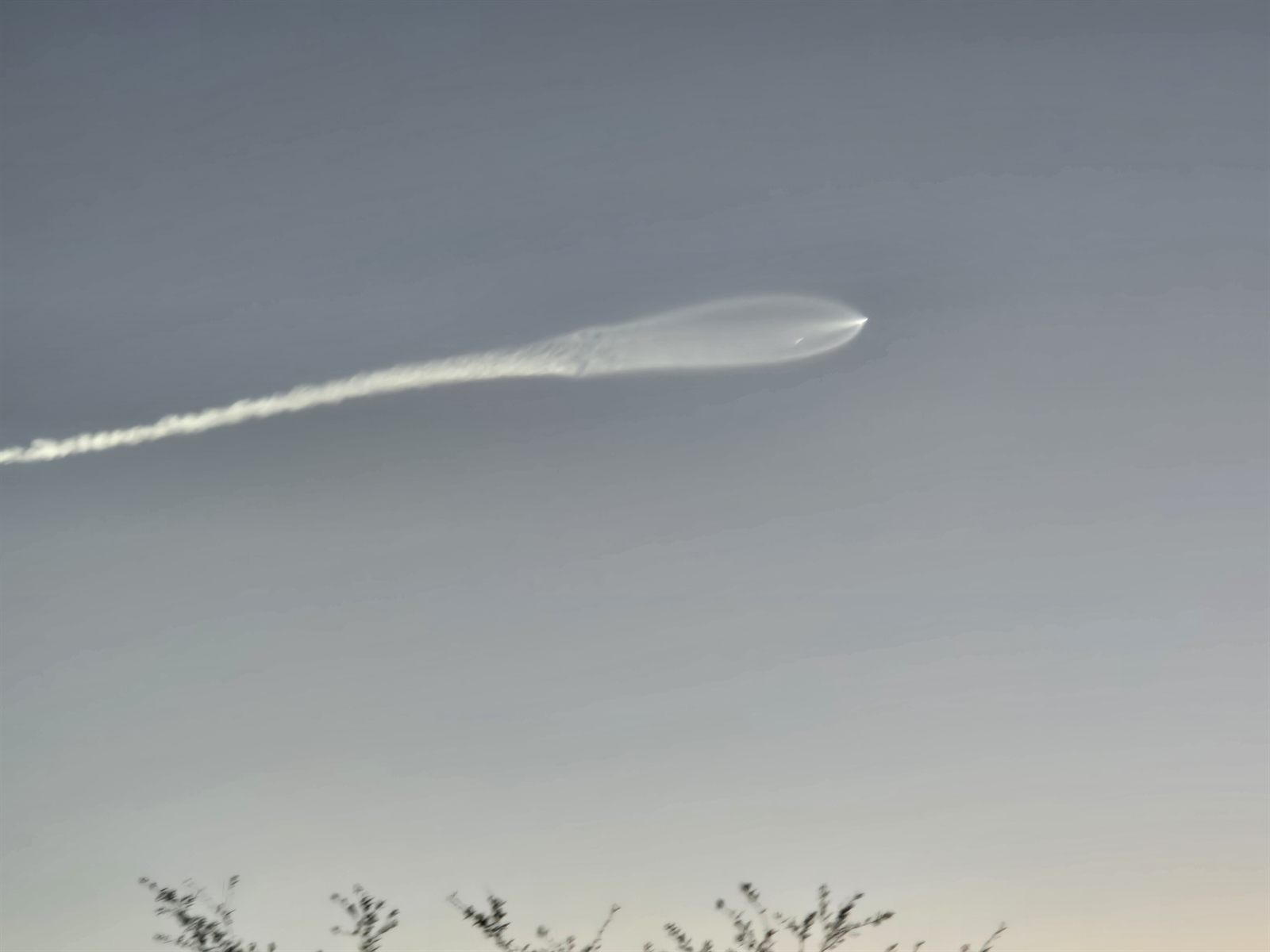
The “jellyfish” shape is the rocket’s exhaust plume catching sunlight. During a dawn or dusk launch, the ground below is already dark, but the rocket climbs high enough that it pokes back into direct sunlight. Up there — in near-vacuum — the exhaust has nothing to hold it in a tight line, so it billows out into that huge glowing fan. The bright point at the tip is the rocket itself (the second stage), still burning or venting as it heads downrange.
That’s why it only happens around twilight: you need the rocket in sunlight and your sky dark. A midday launch just looks like a normal contrail; a deep-night launch is a faint dot. The dawn/dusk window is what produces the dramatic, eerie glow.
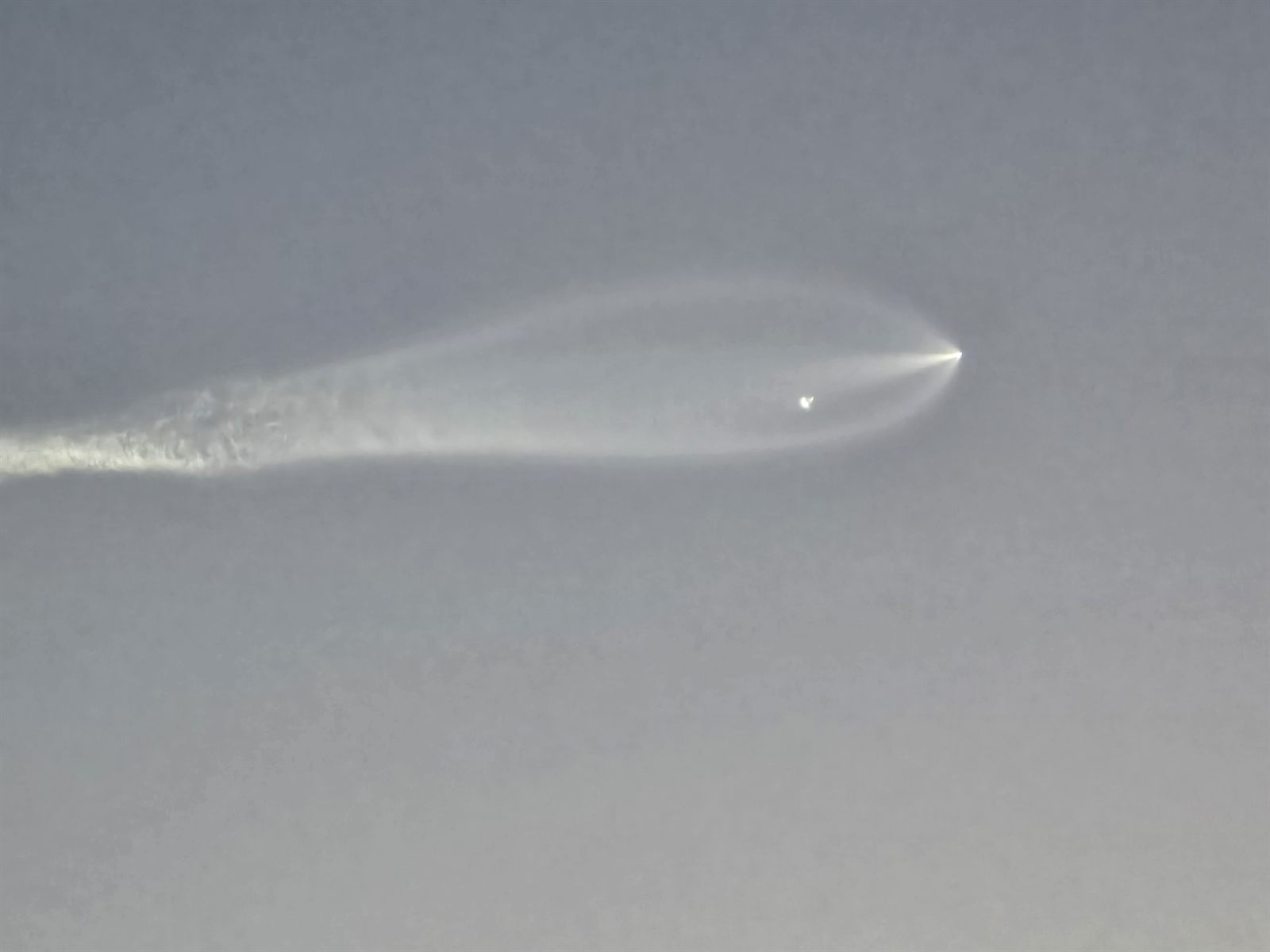
Because it’s so high (tens of miles up), a single launch from Cape Canaveral is visible across almost the whole state — Orlando, Tampa, Fort Myers, Naples, the Gulf coast, even the Keys. So when social media lights up with “what was that in the sky?!” from both coasts at once, that’s the tell: it was a launch.
The “train of lights” — a different thing, a bit later
People mix these two up, but they’re separate events:
- The twilight plume (above) happens during the launch, for a few minutes.
- The “train of lights” shows up a night or two later — a straight, evenly-spaced string of dots gliding silently across the sky. That’s the freshly-deployed Starlink satellites, still bunched together before they spread out and climb to their final orbits, catching sunlight the same way.
The train is brightest in the first few days after a launch and fades as the satellites raise their orbits and fan out. To catch one:
- findstarlink.com predicts train sightings for your city.
- The Starlink app and sites like Heavens-Above show pass times.
- Look during the hour or two after dark or before dawn, when satellites are lit but your sky is not.
How to catch the next Florida launch
SpaceX launches from the Cape very frequently — often multiple times a week. To see one live:
- Check a launch schedule (Spaceflight Now’s launch calendar, or the many “next Florida launch” trackers).
- Aim for a dawn or dusk launch for the jellyfish effect.
- From the Gulf coast, look east / northeast toward the Cape a few minutes after liftoff — it climbs fast.
“Wait — is all this Starlink?”
A lot of these Falcon 9 flights are Starlink missions (SpaceX launches its own satellites constantly), though the twilight plume looks the same no matter the payload. If watching the constellation go up has you wondering whether Starlink is right for your place, start with Starlink plans explained and our honest Starlink vs a local WISP take — and remember that here in Southwest Florida and Indiana, a local provider often beats satellite where it reaches. New to Starlink? Grab a free month through our referral.
Photos taken from Cape Coral, Florida. Not affiliated with SpaceX or Starlink.